
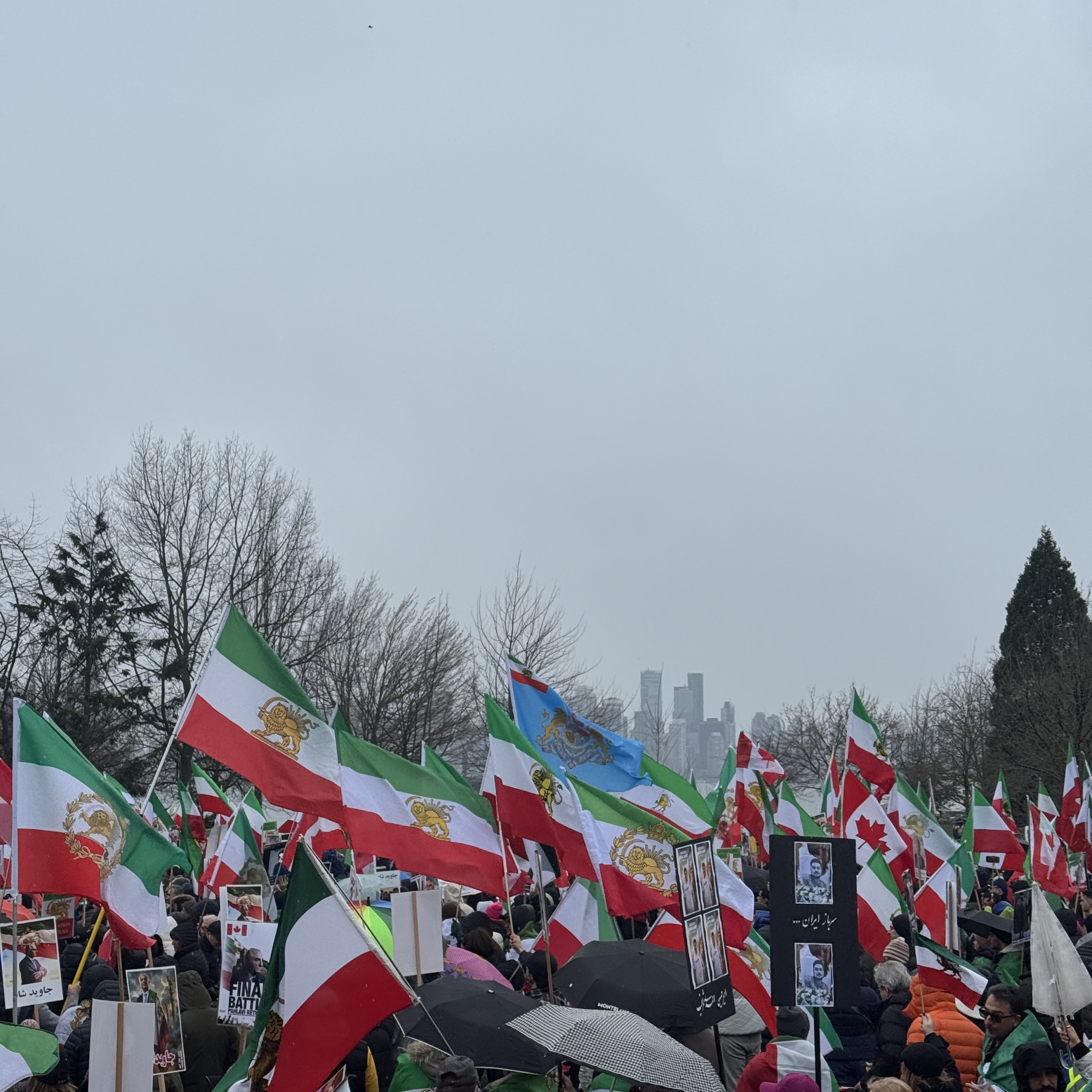
By Mahshid Rezaei, an Iranian Canadian woman living on the North Shore
There are moments when history does not announce itself with a single event, but instead arrives quietly — through exhaustion, through courage, through people who have nothing left to lose.
From where I stand on the North Shore, Iran is living through one of those moments now.
Iran has never been unfamiliar with resistance. For almost five decades, dissatisfaction has lived close to the surface of everyday life. Since the Islamic regime came to power in 1979 — after promising freedom, dignity, and justice — those promises were steadily stripped away. Speaking out became dangerous. Fear became routine. The future grew smaller. Generation after generation learned how to survive without safety, stability, or choice.
I am not a politician or an analyst. I speak from lived experience — as an Iranian woman who lived in Iran for nearly thirty years, entirely under this system. What I remember most clearly is not a single incident, but a constant atmosphere: fear, limitation, and the absence of a real future. This is why so many Iranians live outside their homeland today. No one chooses to leave their country, their family, their roots, and their memories. Forced migration was not an accident — it was produced.
Over the years, there were many uprisings in Iran. Some large, some small. Some remembered, many erased. Each one was met the same way — with violence, imprisonment, and silence. Voices were crushed. Lives were lost. And the world moved on.
I wrote about this long pattern of suppression and resilience in a previous article for MONOVA, which can be found here: Showing Solidarity: The Impact of the Iranian Uprising on North Vancouver – MONOVA
But this time is different.
What is unfolding in Iran today is no longer a protest or a movement. It is a revolution — a national revolution shaped by the people themselves. Inside Iran, people are paying an extraordinary price. They are unarmed. They are standing in the streets with nothing but their voices, demanding basic rights that were taken from them almost fifty years ago. They are risking their lives with a level of courage the world has never witnessed — not only for themselves, but for the very idea of freedom.
This is not a fight only for Iran.
It is a sacrifice that carries meaning far beyond its borders. When a nation resists dictatorship, the ripple effects reach the entire world. A free Iran would not only change the lives of its people — it would strengthen the global community that depends on justice, accountability, and human dignity.
Iranians outside the country are not watching this revolution from a distance. We are its extension. We carry the voices of those inside who are being silenced. Across cities, countries, and continents, the message is the same. We are one people. One voice. Iran.
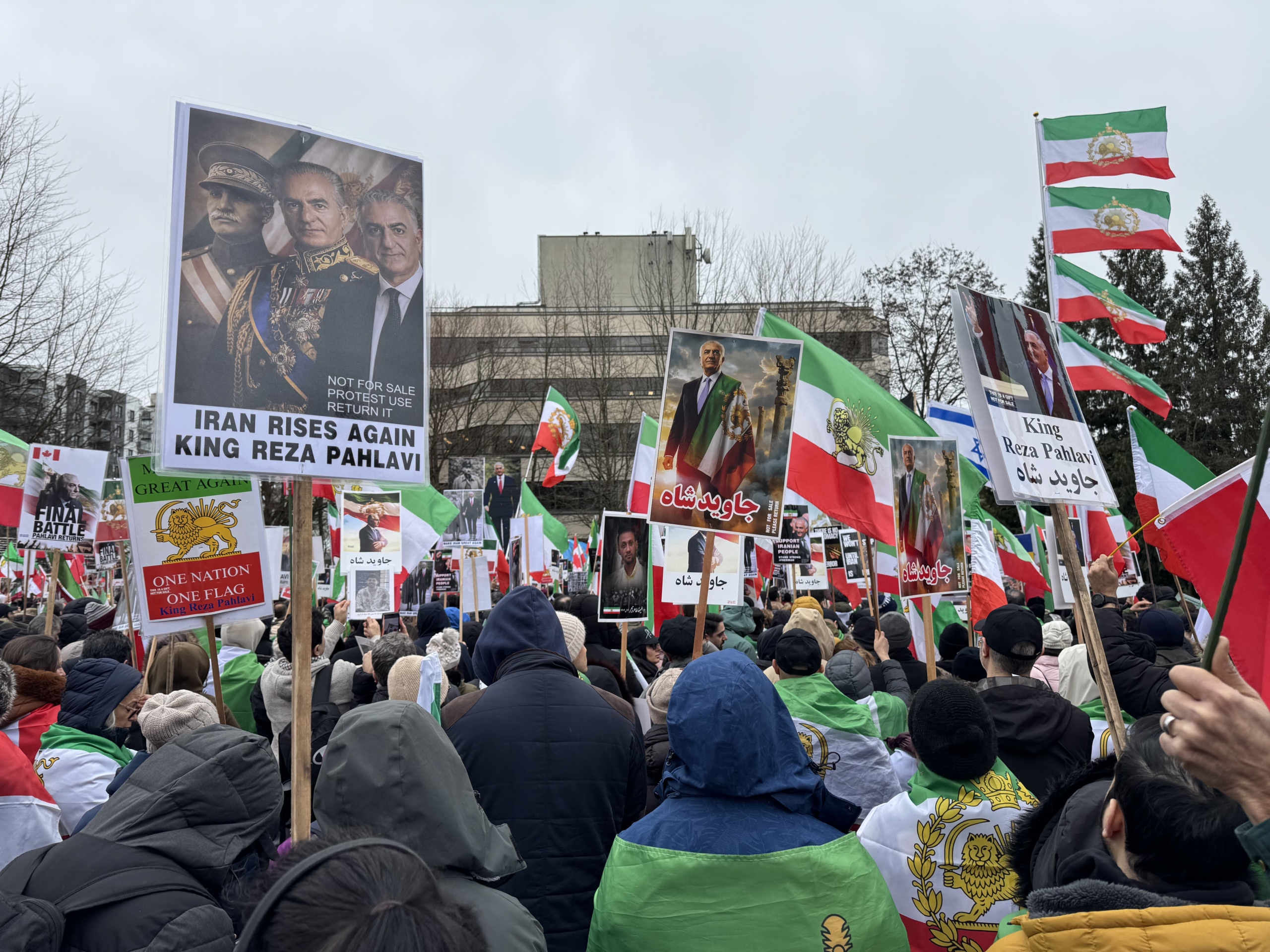
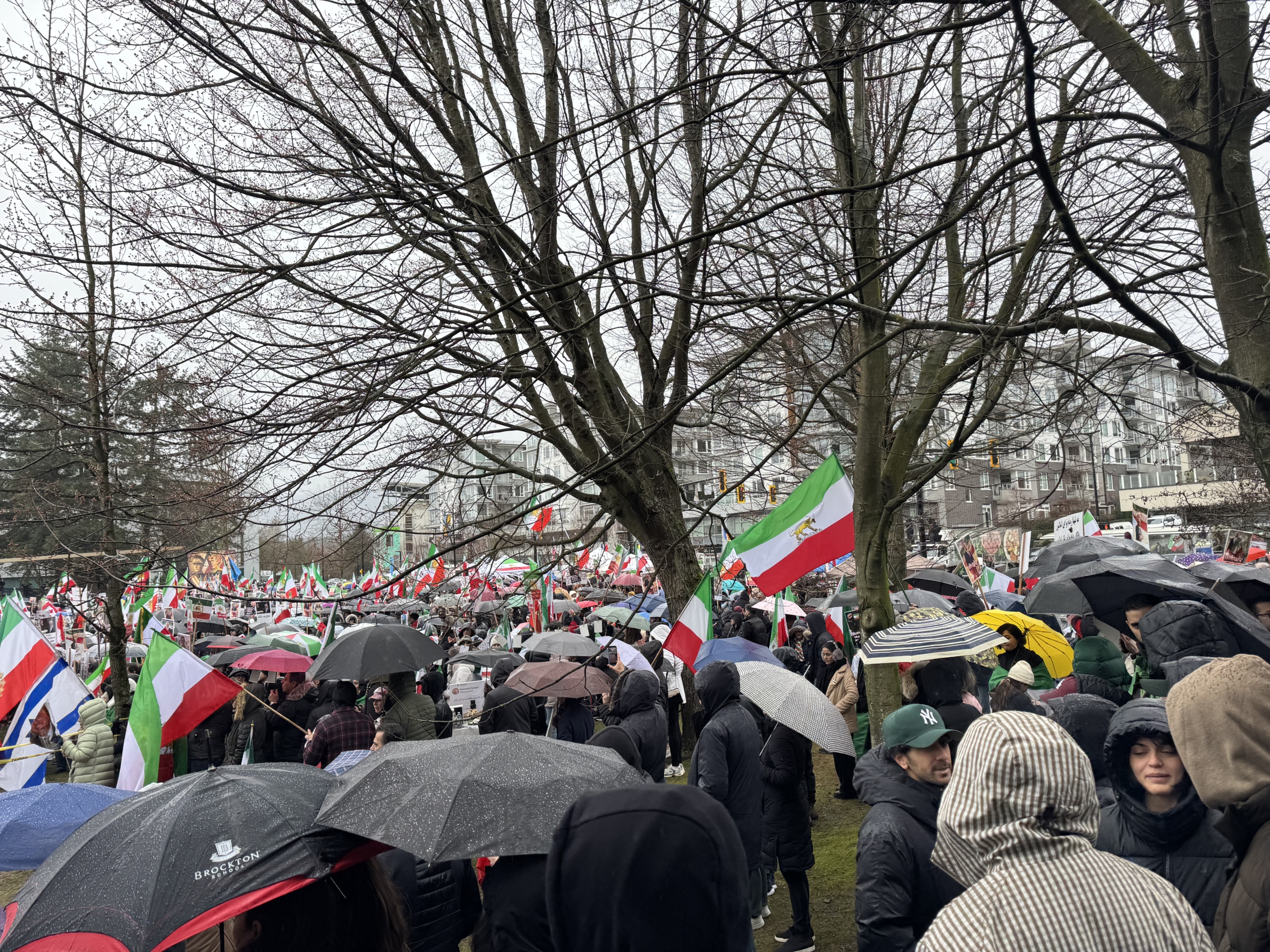
Here on the North Shore, this reality feels close and personal. North Vancouver is home to one of the largest Iranian-Canadian communities in the country. We are neighbours, colleagues, artists, healthcare workers, students, and parents. And what has mattered deeply during this time is not only our presence, but the response of the community around us.
From my own experience, I can say this clearly: the people of North Vancouver have listened. Friends, neighbours, and community members — many of whom are not Iranian — have checked in, asked questions, and stood beside us. As immigrants, we live here as guests, yet we have been met with care, empathy, and solidarity. That humanity matters.
While tens of thousands gather each week in downtown Vancouver, North Vancouver has offered something quieter but just as powerful — both physical space and emotional space. Space for grief. Space for remembrance. Space for being together.
Over time, it became more than a place to gather. It became a place where voices could move outward — where stories were shared, messages were amplified, and where we were given room to speak not only to one another, but beyond our own community. In these spaces, and through these platforms, we were able to carry Iran’s voice further — into conversations, into awareness, and into the wider world.
Public places, community institutions, and local networks allowed people to gather with dignity, without fear, and without silence.
My own connection to this place began quietly. When I first arrived in Canada, I was a student — new, often alone, working on my thesis. In my research, I discovered MONOVA while searching through local archives. What began as academic curiosity slowly became connection. Through volunteering, I learned this place — its culture, its art, its public spaces, and its people. For many Iranians, these moments of connection are how a new place slowly becomes home.
The people of Iran are not asking the world to save them.
They are asking the world not to be silent.
This is a human rights crisis. Silence allows violence to continue. When people are killed in darkness, speaking out can save lives. If the people of Iran could speak freely to the world today, their message would be simple and urgent:
Do not look away.
Share what is happening.
Carry our voices.
When a nation in motion speaks as one, listening becomes a moral choice.

